Grown Up: an article on work
by Jacqueline Day

The question of what it means ‘to be’ will echo down the halls of Cambridge or Yale, and hide under both student and master gowns, until every nursery rhyme in the world has been sung, every fairy tale told, and every child that is to be born, has been born.
But we still ask tiny people what they want to be when they grow up. We ask less tiny people as they stand awkwardly behind their parents in the supermarket. We ask even older, still awkward people what they want to be when they pass that last exam, put on their top hat and tails, and disappear into the fog of the future.
Our home still has a large fold-flat book filled with people in different uniforms with matching paraphernalia — stethoscope, ticket machine or microscope. Or, pink ballet shoes slung over tiny square shoulders. I want to be a ballet dancer. I want to be a zoo-keeper. I want to be a lorry driver, my children used to say, pointing and pressing down hard as though the figures would pop out the other side and dance out the door like the Pied Piper.
Lots of boys grow up under the bed with cars, and trucks that dump, and yellow tractors with real windows and a steering wheel the size of their littlest fingernail. But if we have steered and manhandled them through education as though it were a maze lit by a solitary burning candle (or the untrustworthy Pied Piper himself), we want them to be lawyers, and doctors, and accountants, and bankers, and big people in big suits in big offices.
We want that education to count for something.
Yet when children are up to our knees everything they do delights us. We are amazed by the blocks that stay standing as they add just one more. The feet that track independently across the room, arms held out as though in flight, and our hearts slip onto our tongue as they fall and laugh, head back, victorious not beaten.
When does the little become not enough? When do we start to ask probing questions about their seriousness, their intentions, their long-range plans, in a voice that betrays our doubt that they will do enough or be enough?
A voice that betrays that we won’t be satisfied with calling a failure a victory, even if it was a victory, in the hidden places, where they didn’t let themselves break, or give-up, or be bitter; but maybe we won’t notice that victory because it doesn’t shine as we’d so hoped it would and we never scratch the surface and reveal the real winning number.
I have always wanted my own children to have great ideas and minds that were quiet enough to recognise the stir of thoughts that were creative, connective and good. When they were small, I would think (in my calmest moments!), What ideas can I lead them to today? I had goals for the children, but they were things like joy in learning, concentration and perseverance. Little things, I think. And most of their ideas came from exploring outside and stories.
Maybe it is too much to expect a child when asked what they want to be when they grow up, to answer, To be a maker of great ideas! But is it too much to hope to ourselves, as we wonder what they really want to be, that they have a stirring that is the stirring of a wonderful idea, even if built on a life of little living in other’s eyes? That we want them to be idea-makers – is that too much, or too little?
I don’t think it is too much, and I don’t think it is too little. I think it is just right.
Dreaming of Oxford University: an article
by Jacqueline Day
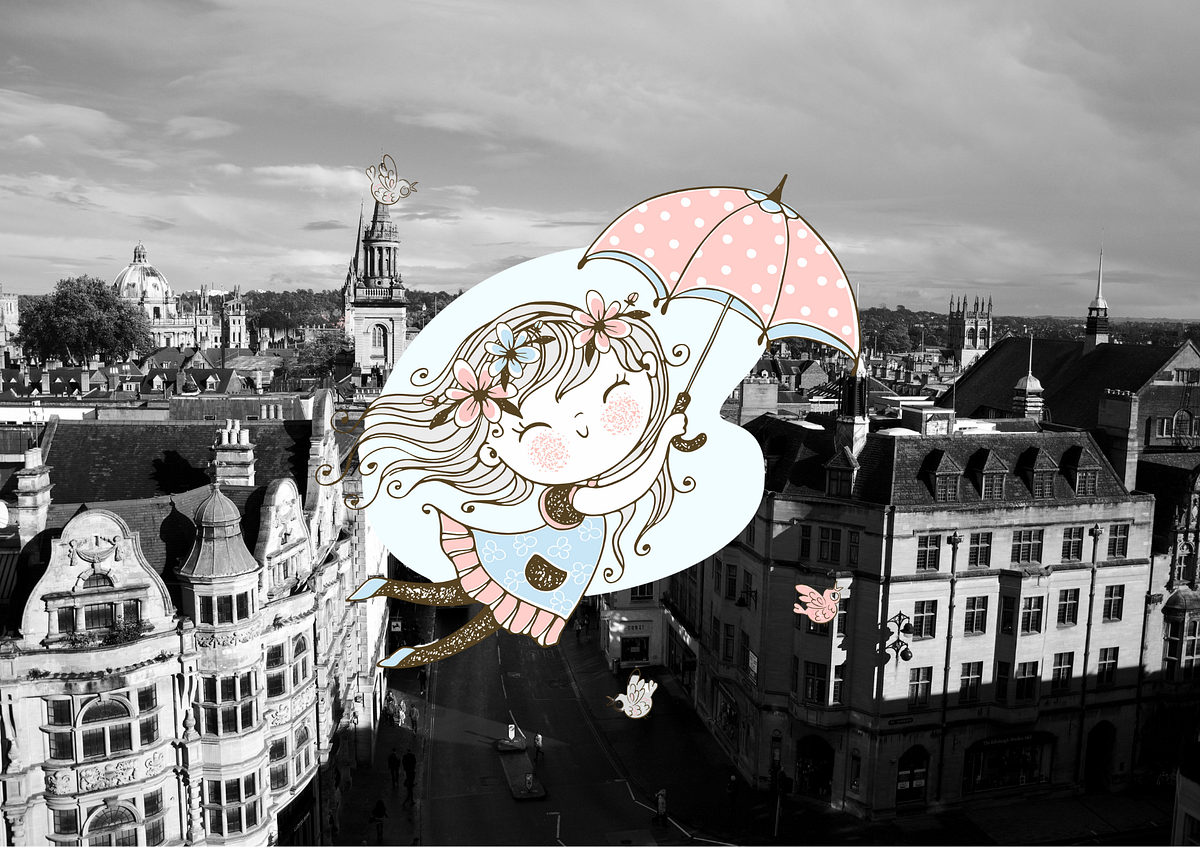
I contemplated doing a Master’s in English Literature after my first degree, but I only wanted to do it at Oxford.
I don’t know how it happened, but those Oxford spires had started to call to me like sirens from between the pages of books in my Victorian, and not quite so prestigious, University library. Thoughts of grander books in grander libraries entered my dreams and I thought I would never think here the thoughts I could think there.
I walked down the road with my tutor who was so enthusiastic about what I wrote, and shared this plan with her. She paused and looked at me hesitantly.
She was an Oxbridge graduate. She used to teach in Prague. She knew all about the bedevilling magic of spires. She was studious and solemn and mysterious and I loved her comments on my essays more than the essays I wrote.
Her intelligent remarks and questions scribbled in the margins had their own secret life, and they talked to me like a colleague, rather than a black-skirted and oversized-jumpered student, as she underlined keywords in her thin-penned dialogue. I could almost see her brow creasing as she paused, interested, looking out from under her tortoiseshell glasses at my odd collection of words.
But as she looked at me whilst we walked slowly in step, both carrying armfuls of books, and I mentioned how I was thinking of doing an MA and that I wanted to do it at Oxford, I knew she knew how competitive it was to get into Oxford for an English Literature MA.
So I was determined to get there another way and one day I pushed open a door, avoiding the suitably large knocker, of a tall Victorian house near the Oxford city museum.
The entrance hall was unassuming and I peered around for a receptionist. She ushered me upstairs, and I made sure my pearl earrings were straight and my chignon neat as I shifted self-consciously under my suit jacket.
“I would spend my research trip in Nepal,” I said, looking at the white-haired gentleman (my interviewer) who gazed over me to the window and the spires behind. I forget what else I said to justify my application to take an M.Phil. in Social Anthropology. It somehow mattered less and less.
The desire to be here, in Oxford, finally floated away like Mary Poppins over the pronged spires as I pushed the front door closed on my way out.
I received the offer letter, but maybe so did anyone else who wanted to pay. So It was a straight path back to my own University city and I became a lawyer and the dreams of Oxford (almost!) didn’t bother me again. But I can understand the pull of both Oxford and Cambridge and the dreams they inspire, and I take great pleasure supporting students who hope to study under their beguiling spires.